Many of the most consequential decisions in a criminal case occur long before the first trial setting, plea hearing, or motion hearing.
A magistrate may be called upon to determine probable cause, advise a defendant of constitutional rights, consider issues related to bail, review criminal history information, and ensure that statutory requirements are satisfied. These decisions affect defendants, victims, law enforcement agencies, courts, and communities alike.
While judges perform the judicial functions of magistration, they are rarely alone in the process. Court personnel often play important roles in reporting, recordkeeping, communication, and compliance. From Public Safety Reporting System requirements to coordination with law enforcement and other agencies, magistrate duties frequently involve a team effort.
That is why TMCEC’s upcoming 4-Hour Virtual Clinic, Magistrate Duties: Critical Decisions in a Changing Landscape, is designed for all municipal court personnel.
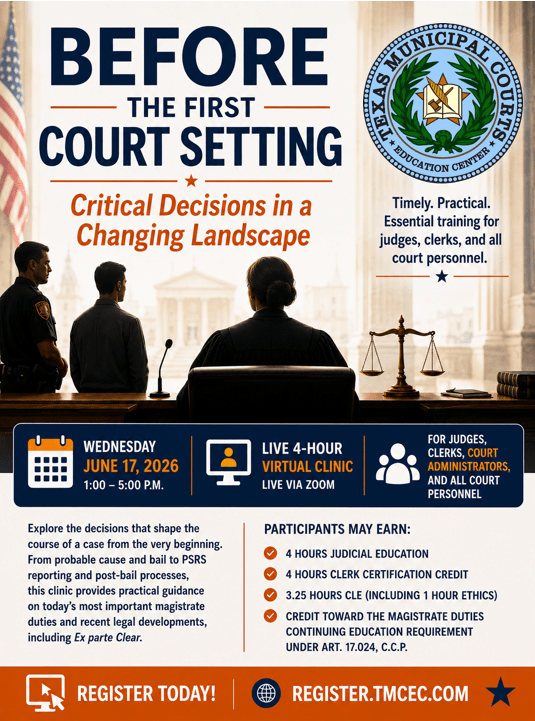
Join us on Wednesday, June 17, 2026, as faculty explore probable cause determinations, bail setting, Public Safety Reporting System updates, denial of bail, post-bail processes, and recent developments.
Participants may earn:
• 4 hours Judicial Education
• 4 hours Clerk Certification Credit
• 3.25 hours CLE (including 1 hour ethics)
• Credit toward the magistrate duties continuing education requirement under Art. 17.024, C.C.P.
Registration is open now at register.tmcec.com. $100 Registration. $50 CLE.

