Municipal judges are often the face of magistration, but they are rarely the only people involved in the process.
From probable cause determinations and bail decisions to Public Safety Reporting System requirements and post-bail procedures, magistration requires coordination among judges, clerks, court administrators, law enforcement agencies, prosecutors, and others. As statutes evolve and courts continue to interpret constitutional requirements, ensuring compliance often becomes a team effort.
Court personnel may assist with reporting magistrate actions, reviewing criminal history information, accessing or entering information into the Public Safety Reporting System, preparing and maintaining records, and facilitating communication between the court, defendants, victims, law enforcement, and other agencies. While the specific responsibilities vary from court to court, the importance of understanding the underlying legal framework remains constant.
Recent legislative changes, ongoing discussions regarding bail practices, and updates to reporting requirements continue to shape the landscape in which magistrates and court personnel operate. The law changes. The duty remains.
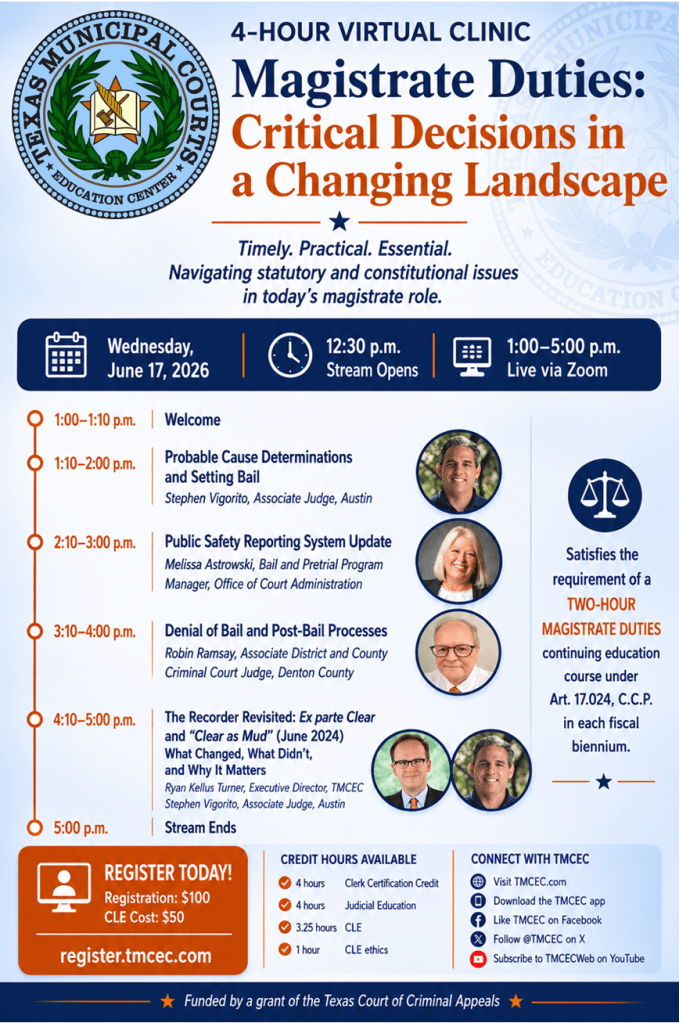
Join TMCEC on June 17, 2026, for our next 4-Hour Virtual Clinic: Magistrate Duties: Critical Decisions in a Changing Landscape. This live virtual clinic will explore probable cause determinations, bail setting, denial of bail, Public Safety Reporting System updates, and recent legal developments affecting magistrates and municipal courts across Texas.
The clinic qualifies for:
* 4 hours Judicial Education
* 4 hours Clerk Certification Credit
* 3.25 hours CLE (including 1 hour ethics)
* The two-hour magistrate duties continuing education requirement in every biennium under Art. 17.024, C.C.P.
Whether you serve as a judge, clerk, court administrator, or prosecutor, this clinic offers practical guidance on one of the most important functions performed by Texas courts.
Registration is now open at register.tmcec.com.